
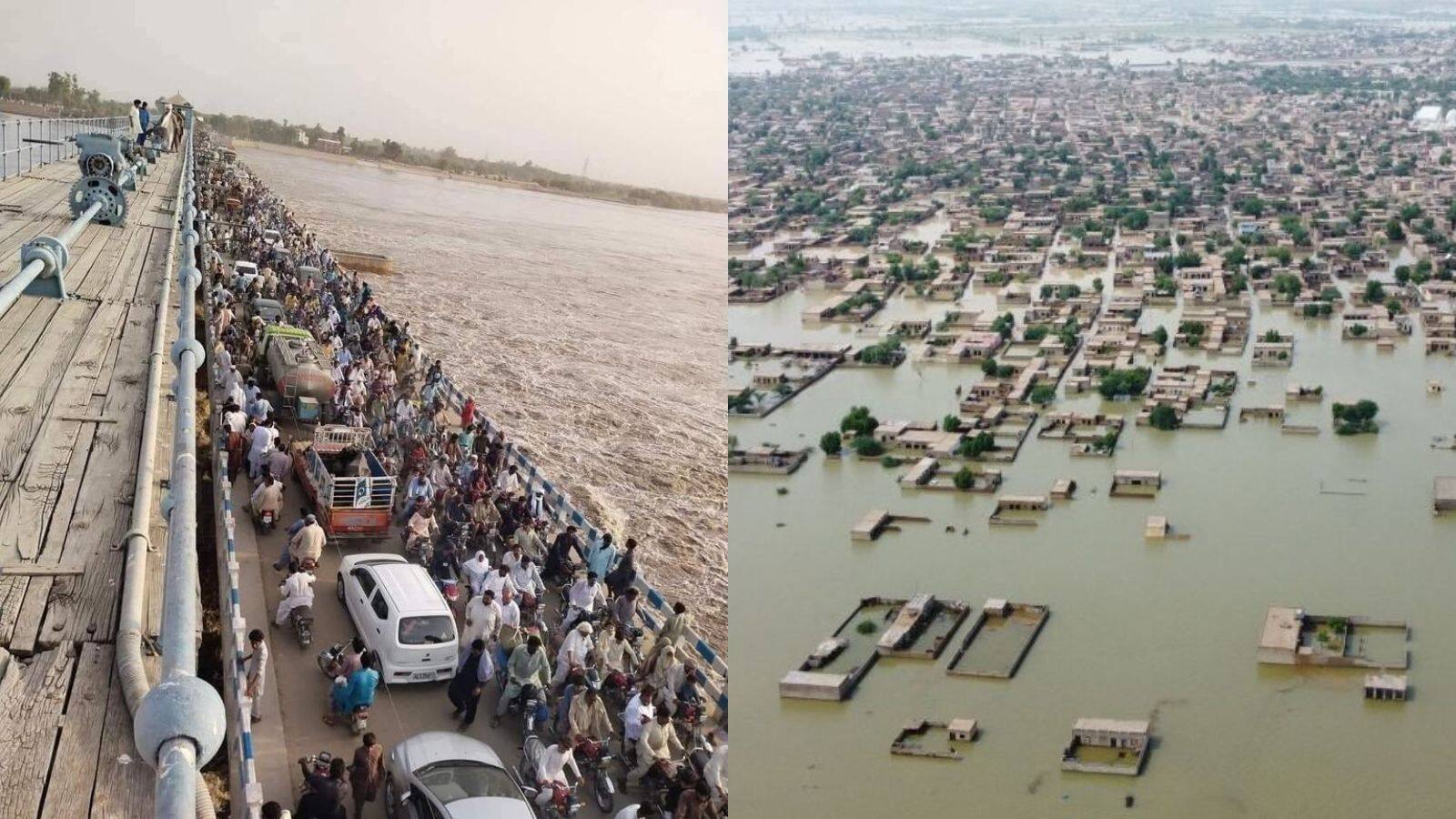
India warned Pakistan of immediate flood earlier this week. This helped Pakistan officials to evacuate the people on time in time and averted a big life in Punjab province. After the Pahalgam terror attack on 22 April, sharing of water figures was stopped under the Indus Water Treaty. Nevertheless, India had to release extra water from large dams due to continuous heavy monsoon rains. In such a situation, New Delhi decided to send real-time alert to Pakistan on humanitarian grounds.
According to Indian government sources, the first flood alert was sent to Islamabad on Monday through diplomatic channels. After this, two more warnings were given on Tuesday and Wednesday. In these, there was great apprehension of floods in Tawi and Ravi rivers. India warned that water in many dams including Madhopur and Atin has been filled to dangerous levels. Due to heavy rains, the gates of these dams had to be opened, so that the dam could be saved from breaking.
Officials said that these messages were sent to Pakistan to help in preparation before the possible floods. However, India stopped the formal cooperation associated with water under the 1960 Indus Water Treaty after 26 people were killed in the beginning of this year.
An Indian official said, “Due to heavy rains in many areas of India, it was necessary to open the gates of some dams. It was necessary to share this information with Pakistan, so that loss of life and property could be avoided.”
Pakistan’s quick action
After alert received from India, Pakistan’s Provincial Disaster Management Authority (PDMA) issued immediate withdrawal orders in Punjab province. Punjab is considered to be the agricultural center of Pakistan.
The report from the satellite already showed that Thein dams had been filled by 97%, but the confirmation from India made these steps more important and faster.
By Wednesday, Pakistani officials had taken over 1.5 lakh people to safe places from flood affected areas. About 35,000 of these people left their homes after warning.
People from hundreds of villages situated on the banks of Ravi, Sutlej and Chenab rivers were removed with the help of army. Relief camps were set up for the displaced people, where they were provided food, medicines and temporary hideouts.
Senior PDMA officer Irfan Ali Kathia said, “The flood situation is serious. The next 48 hours will be very important.” Deputy Commissioner Saba Asghar Ali, who is watching relief work near Pasroor city, said that 16 villages are at risk at this time, but preparations already made have handled the situation to some extent.
The risk of increasing water on both sides
Tej Monsoon has affected both India and Pakistan. Rivers are in spate due to continuous rains in Jammu and Kashmir, while in Punjab, the Sutlej, Beas and Ravi rivers are already flowing at the threat level. The Jammu administration had to open the gates of several dams to prevent the situation from deteriorating.
The situation in Pakistan is very serious. So far, more than 802 people have died in the monsoon, which started from late June, about half of which has died this month. Punjab province is the most affected, where half of Pakistan’s 24 million population lives. The fields, villages and towns have been badly drowned. The number of casualties has decreased slightly due to massive evacuation, but officials say that if the rains are further intensified, the coming days may be more dangerous.
Climate crisis and Indo-Pak relationship
This incident shows that climate pressure can sometimes open the path of human cooperation amidst the bitterness of India and Pakistan. Even though relations are stressful after the Pahalgam attack and the prohibition of banning the data sharing under the Indus Water Treaty, India’s sending a flood warning to Pakistan proves that human compulsion can be above enmity.
Irrigation Minister Kazim Raza Pirzada of Punjab province admitted that the changing weather is making such cooperation more necessary. He said, “Due to climate change, the eastern rivers are raining more than before.”